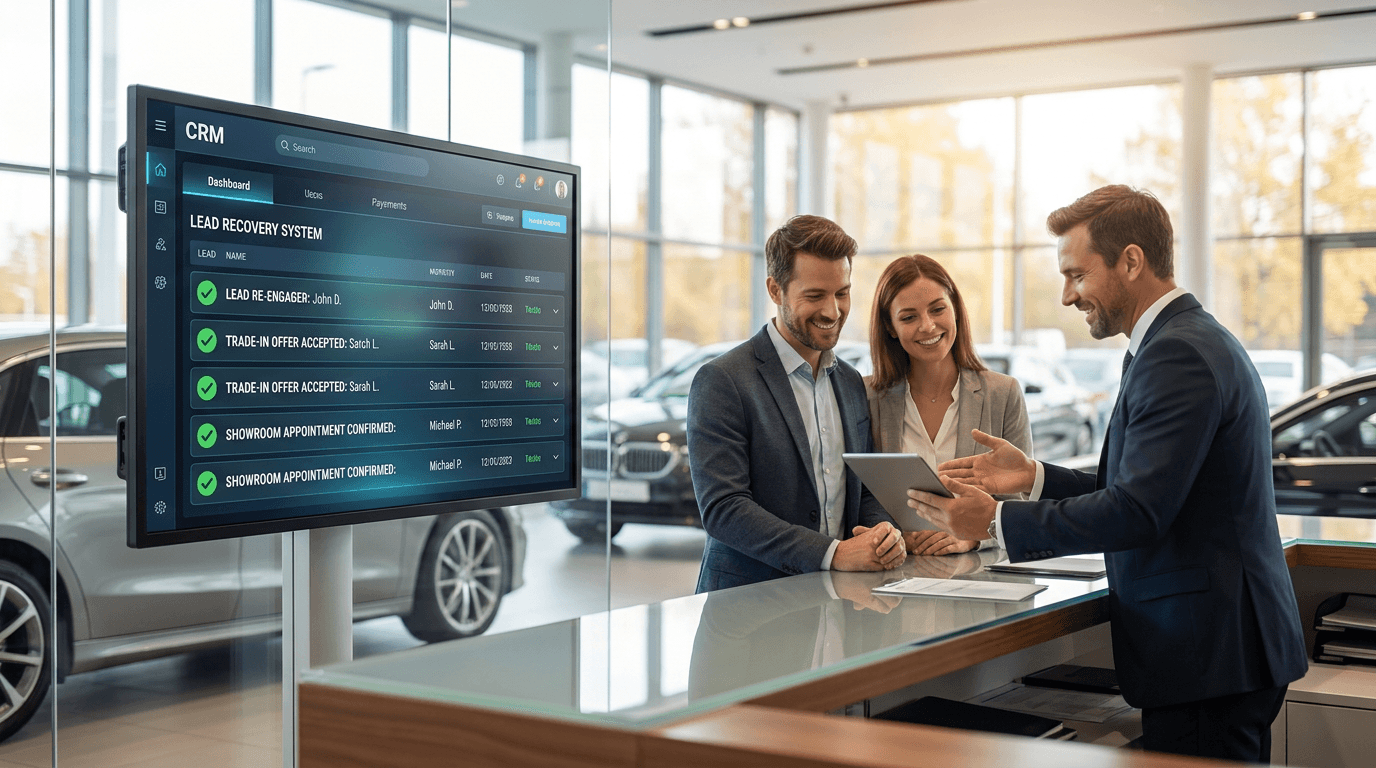
The Modern AI Advantage in Dealership Operations: Sub-30s Response vs. 4-Hour Lag
Analyzing 500,000 automotive leads: why sub-30-second conversational response velocity outperforms human BDC teams by over 300%.
Executive Summary & Key Findings
- Inbound internet lead conversion declines by over 80% if the dealership takes longer than 15 minutes to respond.
- Human BDC teams average 4 hours and 18 minutes to respond to digital inquiries, with evening leads languishing overnight.
- Conversational AI initiates intelligent two-way SMS exchanges in under 30 seconds, answering complex inventory questions.
- Combining front-end AI response with automated back-office workflow triggers increases showroom appointment conversion by over 300%.
The Velocity Imperative in Digital Automotive Retail
In modern retail automotive, response speed is the single greatest determinant of sales conversion. When a consumer submits an inquiry on a vehicle detail page, their commercial interest is at its absolute peak.
They are sitting at their computer or holding their smartphone, actively thinking about buying a car. Every minute that elapses without a response allows that purchase intent to cool, opening the door for competing dealerships to win the sale.
An analysis of over 500,000 digital automotive inquiries reveals a stark truth: responding within 5 minutes yields a 21x higher probability of setting a showroom appointment compared to waiting 30 minutes. After 15 minutes, lead conversion rates plummet by over 80%.
The 4-Hour Human Lag: Why Traditional BDCs Struggle
Despite the proven importance of response velocity, the average dealership response time to an inbound lead remains an astonishing 4 hours and 18 minutes.
This lag is not due to laziness; it is the structural reality of human-powered BDC operations. BDC coordinators are occupied answering phone calls, greeting showroom guests, or attending departmental sales meetings.
Inquiries received after 7:00 PM sit untouched in CRM queues until the following morning. By the time a human representative contacts the shopper, the consumer has often already engaged with another dealer or abandoned their search entirely.
The Sub-30-Second Conversational Standard
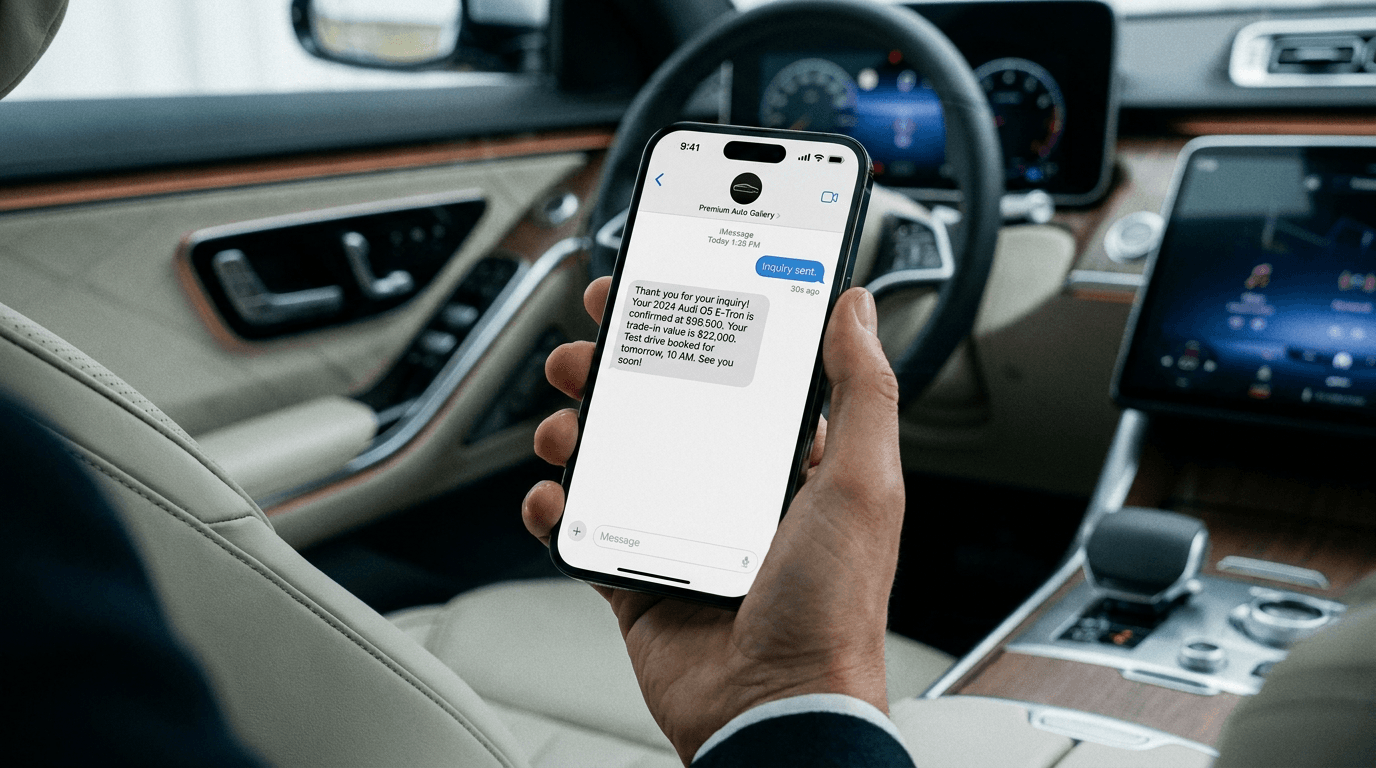
Autonomous conversational AI completely eliminates the response lag. Within 30 seconds of lead submission, day or night, the AI initiates a friendly, personalized text message exchange.
Unlike generic automated email auto-responders that say "We received your message," the AI addresses the customer exact questions: "Hi Sarah, I see you are inquiring about our 2024 CR-V EX-L in Lunar Silver. That vehicle is available on our lot right now. Are you looking to finance, lease, or evaluate a trade-in?"
Shoppers respond enthusiastically because they receive immediate, relevant answers. Over 70% of AI-initiated conversations result in active multi-turn dialogues.
Dual-Engine Automation: Front-End Engagement & Back-Office Triggers
The true power of modern automotive AI lies in dual-engine automation: combining customer-facing conversational intelligence with back-office operational triggers.
While the AI chats with the customer, it simultaneously interrogates live DMS inventory ledgers, calculates local sales taxes, and checks technician service capacity.
If the customer requests a test drive, the AI books the appointment directly into the CRM calendar, assigns a designated sales consultant, and texts a confirmation pass with turn-by-turn directions to the customer smartphone.
When the customer arrives at the showroom, the sales consultant receives a complete transcript of the conversation and a pre-configured desking worksheet, enabling a seamless 20-minute delivery experience.
The Business Impact: 300% Higher Appointment Conversion
Dealerships that replace traditional delayed BDC workflows with sub-30-second conversational AI consistently experience extraordinary sales gains. Completed showroom appointments increase by over 300%, while lead-to-sale conversion rates jump from 8% to over 24%.
Most impressively, these gains are achieved without increasing BDC headcount or spending additional marketing dollars. By simply engaging interested car shoppers at the exact moment of intent, dealerships turn their existing digital traffic into a flood of qualified showroom buyers.
Related Automotive Intelligence
CDK vs Reynolds vs DMSPilot: What Dealership Groups Should Know Before Switching in 2026
Why Dealerships Lose $200K+ a Year to Disconnected DMS, CRM, and Inventory Systems