
DMS Replacement Without the 18-Month Nightmare: A Large Group Framework for Under 120 Days
An enterprise deployment methodology for multi-rooftop dealer groups: phased wave cutovers, automated schema normalization, and live mirrored sandboxes.
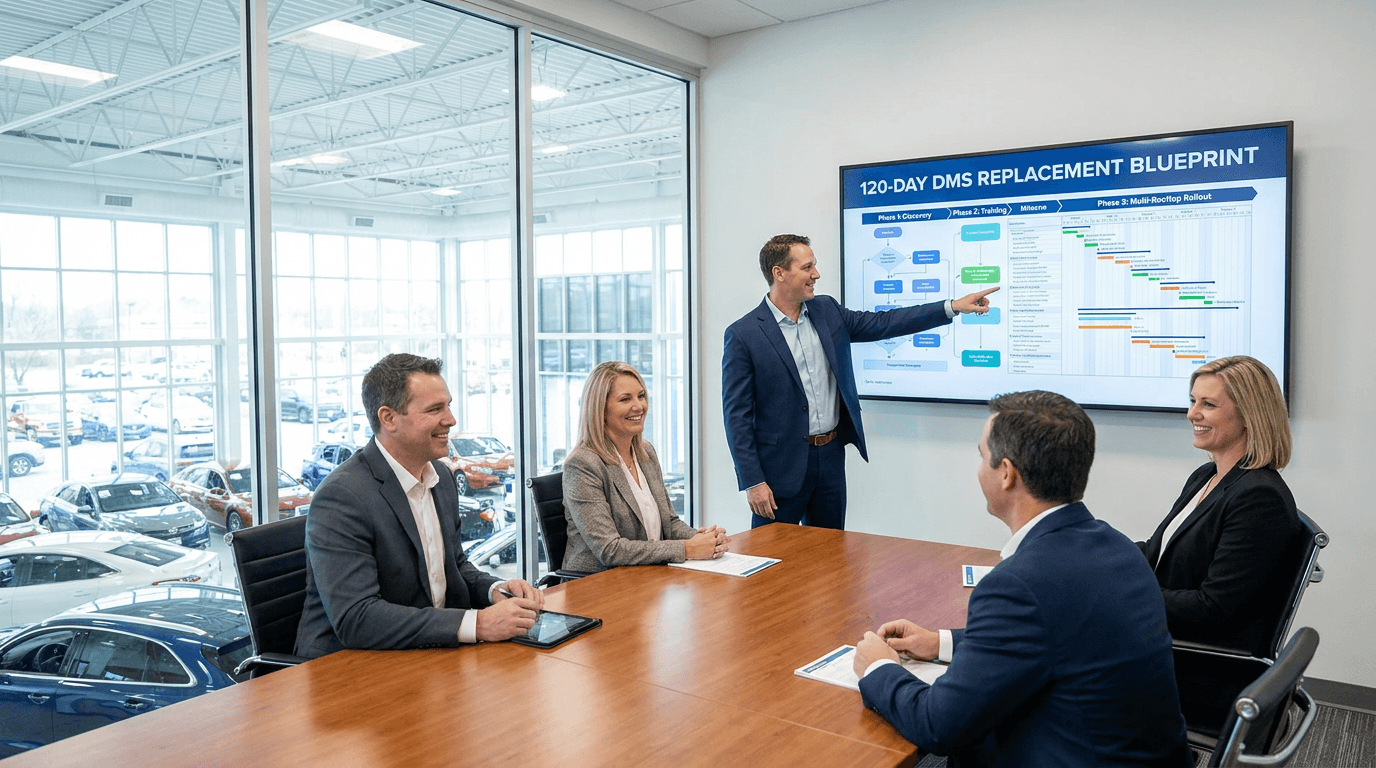
Executive Summary & Key Findings
- Enterprise DMS migrations historically drag on for 12 to 18 months, causing severe executive fatigue and operational disruption.
- Automated schema normalization harmonizes differing chart of accounts and parts catalogs across multiple rooftop brands in 30 days.
- Live bi-directional delta mirroring allows staff to practice in sandboxed production clones populated with real active deals.
- Phased wave cutovers transition stores in clusters of 3 to 5 rooftops over consecutive weekends with zero weekday downtime.
The Enterprise Migration Dilemma for Large Dealer Groups
For large automotive groups operating 15, 30, or 50+ rooftops, the prospect of replacing an enterprise DMS is often viewed with dread. Historically, enterprise software rollouts in retail automotive have been brutal, multi-year ordeals characterized by budget overruns, operational chaos, and high executive turnover.
When an enterprise cutover drags on for 12 to 18 months, dealerships suffer from chronic project fatigue. Store general managers disengage, office controllers struggle to maintain dual sets of books, and customer satisfaction scores plunge.
However, modern cloud software deployment methodologies, battle-tested in enterprise fintech and logistics, have revolutionized automotive transitions. By utilizing automated schema mapping, mirrored sandboxes, and phased wave cutovers, large dealer groups can complete enterprise DMS replacements in under 120 days with zero operational disruption.
Phase 1 (Days 1 to 30): Automated Multi-Store Extraction & Schema Mapping
The first 30 days establish the digital foundation across all group rooftops. High-throughput automated extraction pipelines connect to legacy DMS databases, pulling 10 years of historical transactional data across customer profiles, vehicle service history, parts catalogs, and general ledger records.
Because different rooftop brands often utilize divergent chart of accounts structures and parts numbering systems, automated schema mapping engines normalize the data into a unified enterprise format.
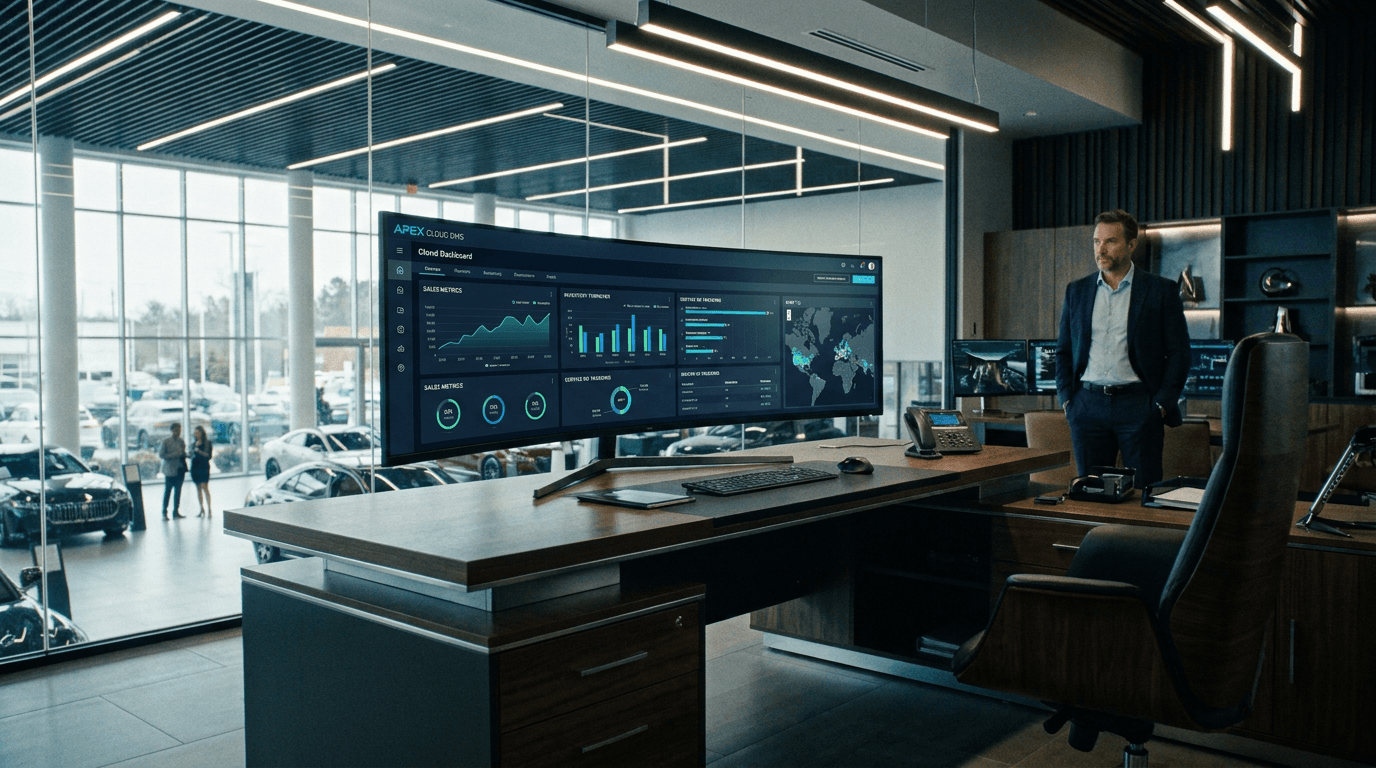
Corporate controllers review normalized trial balances and chart of accounts mappings through an executive dashboard, verifying that every balance sheet schedule matches group standards before any data is loaded into the production environment.
Phase 2 (Days 31 to 75): OEM Integration & Continuous Delta Synchronization
During the second phase, technical integration teams establish direct, certified factory communication links for every vehicle manufacturer represented in the dealer group portfolio. Vehicle ordering pipelines, parts catalog updates, warranty claim processing feeds, and monthly financial statement uploads are certified and tested.
Simultaneously, continuous bi-directional delta synchronization is established between the legacy platforms and the new operating system. Every live transaction occurring across any rooftop immediately mirrors into the new environment, ensuring that test databases remain completely synchronized with real-world dealership operations.
Phase 3 (Days 76 to 105): Role-Based Shadowing on Live Mirrored Data
Rather than training staff on generic dummy databases, employees train on exact replicas of their own live store data. Sales managers desk active deals, service advisors write real customer repair orders, and billing clerks post actual vehicle sales in the sandboxed clone.
Specialized trainers conduct departmental shadowing sessions tailored to specific roles: Variable Operations, Fixed Operations, Parts Counter, F&I Business Office, and Corporate Accounting.
By the time the training phase concludes, staff across every store have executed hundreds of daily transactions in the new system, completely conquering the learning curve weeks before the actual cutover.
Phase 4 (Days 106 to 120): Phased Wave Cutover & Go-Live
Rather than attempting a risky big-bang cutover where all 30 stores switch simultaneously, modern enterprise deployments use phased wave cutovers. Stores are clustered into regional waves of 3 to 5 rooftops and transitioned over successive weekends.
Wave 1 transitions the initial stores over a Friday evening to Sunday afternoon cutover window. Once the first wave is stabilized and operating smoothly, Wave 2 transitions the following weekend, followed by Wave 3.
This phased approach ensures dedicated corporate support teams are physically present at every rooftop during their first week of live trading, providing hands-on assistance and guaranteeing zero operational interruption.
The Result: Unifying 30 Stores in 4 Months
Executing an enterprise DMS replacement in under 120 days saves large dealer groups hundreds of thousands of dollars in transition consulting fees, prevents employee burnout, and accelerates the time-to-value of modern cloud technology.
Once live, the group operates on a single connected operating system, unlocking centralized inventory visibility, consolidated financial closing in under three days, and the computational speed necessary to dominate regional automotive retail.
Related Automotive Intelligence
CDK vs Reynolds vs DMSPilot: What Dealership Groups Should Know Before Switching in 2026
Why Dealerships Lose $200K+ a Year to Disconnected DMS, CRM, and Inventory Systems