
The "CDK and Reynolds Tax" Exposed: The True Cost of Certified Integration Fees
An investigative teardown of third-party integration programs (3PA and RCIP): how legacy vendors monetize dealership data and stifle retail innovation.
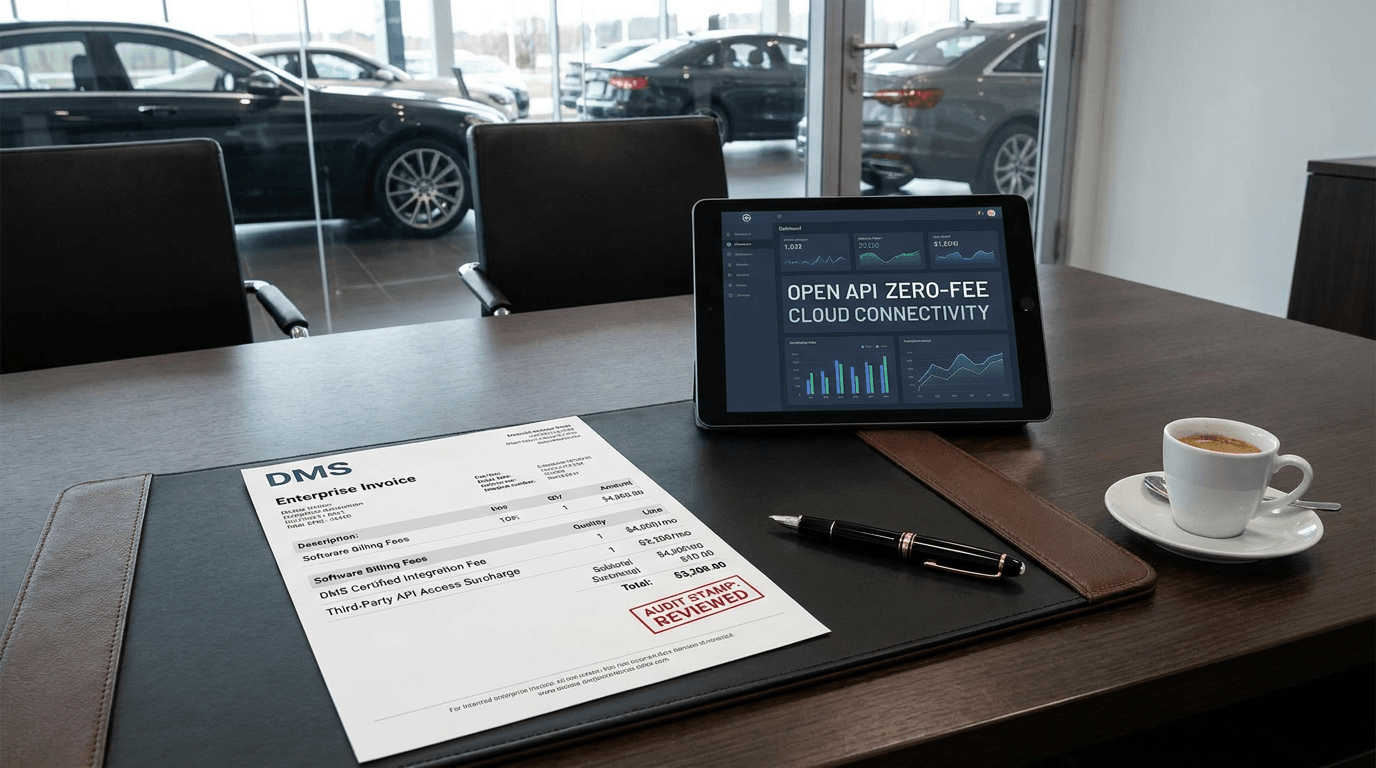
Executive Summary & Key Findings
- Legacy DMS vendors charge third-party software companies between $800 and $2,500 per month per rooftop to access dealership records.
- Software providers pass these costs directly back onto dealership invoices as technology access and certified integration surcharges.
- A five-store dealer group pays upwards of $36,000 to $96,000 per year simply for permission to access their own customer and inventory data.
- Modern open platforms provide 100% data sovereignty and zero-cost REST/GraphQL APIs, eliminating third-party certification taxes.
The Anatomy of a Software Tollbooth
Imagine purchasing a commercial office building, only to discover that the lock manufacturer charges you an ongoing monthly fee every time an authorized contractor or employee enters through your front door. If you refuse to pay the fee, the lock company locks the door and refuses to let your employees inside.
In retail automotive, this absurd scenario is not hypothetical; it is the daily operational reality of thousands of dealerships operating on legacy DMS platforms.
Under the banner of security access and certified integration programs, legacy vendors have constructed elaborate software tollbooths that charge exorbitant fees simply to allow third-party software tools to exchange data with the dealership core ledger.
The Economics of 3PA and RCIP Integration Programs
Through programs such as the CDK Security Access Network (3PA) and Reynolds Certified Integration Program (RCIP), legacy vendors charge independent software vendors (ISVs) between $800 and $2,500 per month per dealership location for API connectivity.
Whether the third-party tool is a modern customer relationship management (CRM) system, an AI-powered BDC assistant, a digital vehicle inspection app, or an inventory merchandising widget, the vendor must pay this monthly toll.
Software companies cannot absorb these exorbitant costs within their standard subscription fees. Instead, they pass them directly back onto the dealership monthly invoice under line items labeled "certified integration fee," "data access surcharge," or "secure gateway fee."
The Compounding Financial Drag on Multi-Rooftop Groups
For a single dealership utilizing five or six modern software applications, integration surcharges add $3,000 to $8,000 per month in unexpected operational expense. For a multi-rooftop dealer group operating 10 locations, this integration tax exceeds $500,000 annually.
Crucially, this half-million-dollar expenditure creates zero tangible value for the dealership. It produces no additional car sales, books no service appointments, and builds no customer equity. It is pure economic rent extracted by legacy software monopolies.
Furthermore, this tollbooth model stifles dealership innovation. Innovative software startups with groundbreaking solutions are frequently priced out of the automotive market because they cannot afford the upfront integration certification fees demanded by legacy vendors.
The Legal, Regulatory, and Industry Pushback
The certified integration tax has sparked intense legal and regulatory scrutiny across the retail automotive sector. Independent software vendors and automotive dealer associations have filed federal antitrust lawsuits, alleging that legacy vendors engage in anti-competitive behavior and unlawful data monopolization.
Simultaneously, state automotive dealer associations are lobbying state legislatures to revise automotive franchise protection laws, introducing explicit statutory provisions that guarantee dealerships absolute legal ownership of their data and forbid DMS vendors from charging third-party access fees.
The Federal Trade Commission (FTC) has also taken active notice, reviewing data portability rules that will mandate open, uninhibited API access across commercial enterprise software.
The Modern Alternative: Complete Data Sovereignty
Modern automotive operating systems like DMSPilot reject the tollbooth model entirely. Built on the foundational principle that a dealership data belongs exclusively to the dealership, modern platforms provide open, fully documented REST and GraphQL APIs at zero additional cost.
Any authorized third-party application can connect in minutes without certification fees, vendor tollbooths, or arbitrary data throttles. This open approach frees dealerships from predatory software taxes, fosters healthy competition among software providers, and accelerates retail innovation.
Related Automotive Intelligence

CDK vs Reynolds vs DMSPilot: What Dealership Groups Should Know Before Switching in 2026

Why Dealerships Lose $200K+ a Year to Disconnected DMS, CRM, and Inventory Systems