AI That Actually Moves the Needle in Automotive: 7 Use Cases With Measurable ROI (Not Hype)
Cutting through generative AI marketing hype to review 7 real-world dealership applications generating verifiable EBITDA gains within 12 months.
Executive Summary & Key Findings
- Focus on practical, verifiable AI applications that directly increase vehicle sales, service bookings, or accounting speed.
- Autonomous BDC lead follow-up delivers a 34% increase in booked showroom appointments in the first 90 days.
- Computer vision trade appraisals allow mobile shoppers to capture equity estimates in two minutes, boosting lead conversion.
- Intelligent warranty claims auditing reduces factory rejections from 8.5% down to under 1.2%, accelerating cash flow.
Separating Automotive AI Reality from Vendor Marketing Hype
Over the past two years, retail automotive conferences have been flooded with software vendors slapping AI badges on generic products. Dealership owners are pitched everything from AI-written email blasts to virtual reality avatars, with promises of revolutionary transformation.
For pragmatic dealership operators, the primary question remains: which artificial intelligence applications generate measurable, verifiable EBITDA gains within 12 months, and which are expensive marketing distractions?
When evaluating AI investments, dealership principals should focus exclusively on applications that solve specific operational bottlenecks, eliminate clerical labor, or directly generate gross profit.
Use Case 1: Autonomous Inbound BDC Lead Engagement (+34% Appt Rate)
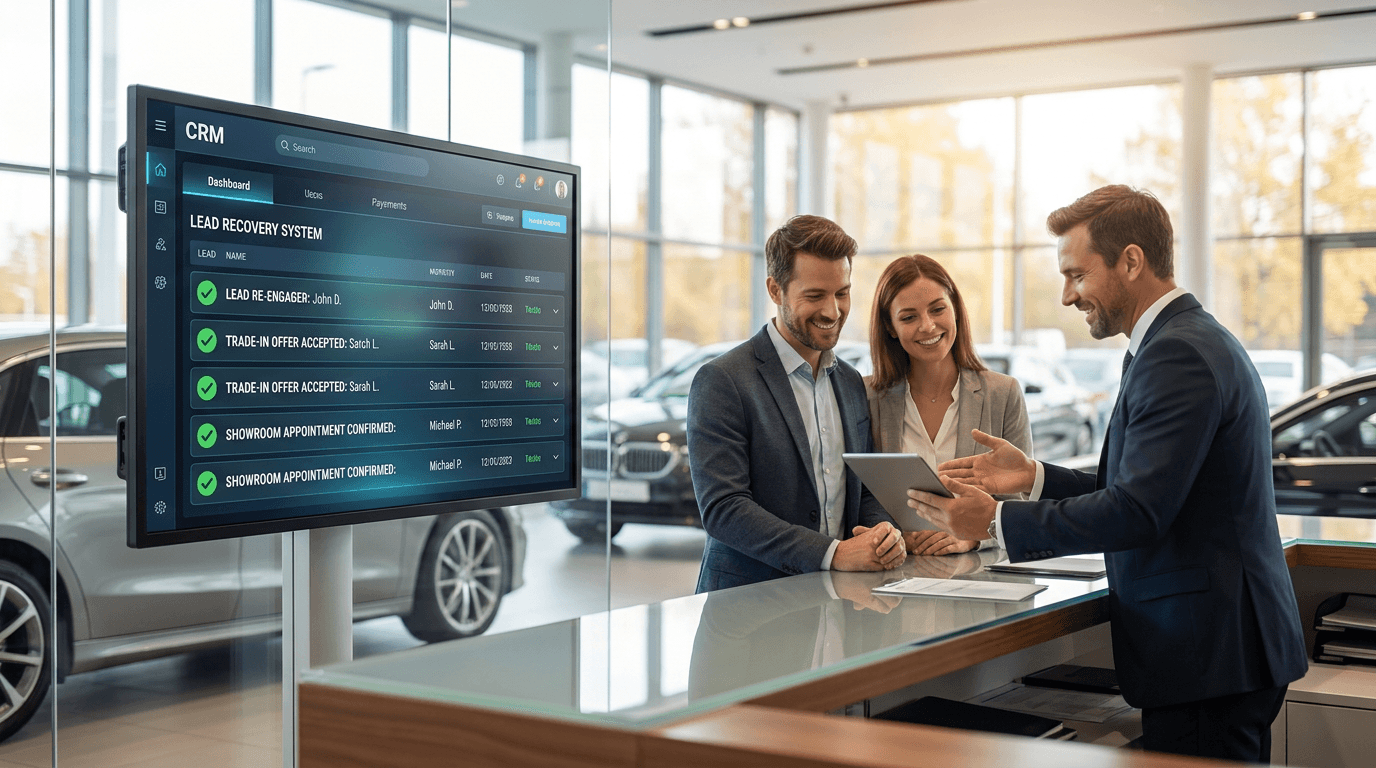
The first and most immediately profitable AI application is autonomous inbound lead response. By engaging digital inquiries via natural two-way SMS in under 30 seconds, conversational AI bridges the critical 15-minute response window.
The AI answers specific vehicle option questions, verifies lot availability, provides transparent price quotes, and books firm showroom appointments directly into sales calendars.
Dealerships deploying autonomous BDC agents consistently experience a 34% increase in completed showroom appointments and an average of 14 additional vehicle sales per month per rooftop.
Use Case 2: Computer Vision Mobile Trade-In Appraisals
Trade-in friction is a primary reason car shoppers abandon online purchasing journeys. Requiring consumers to fill out extensive 20-field vehicle condition forms creates immense drop-off.
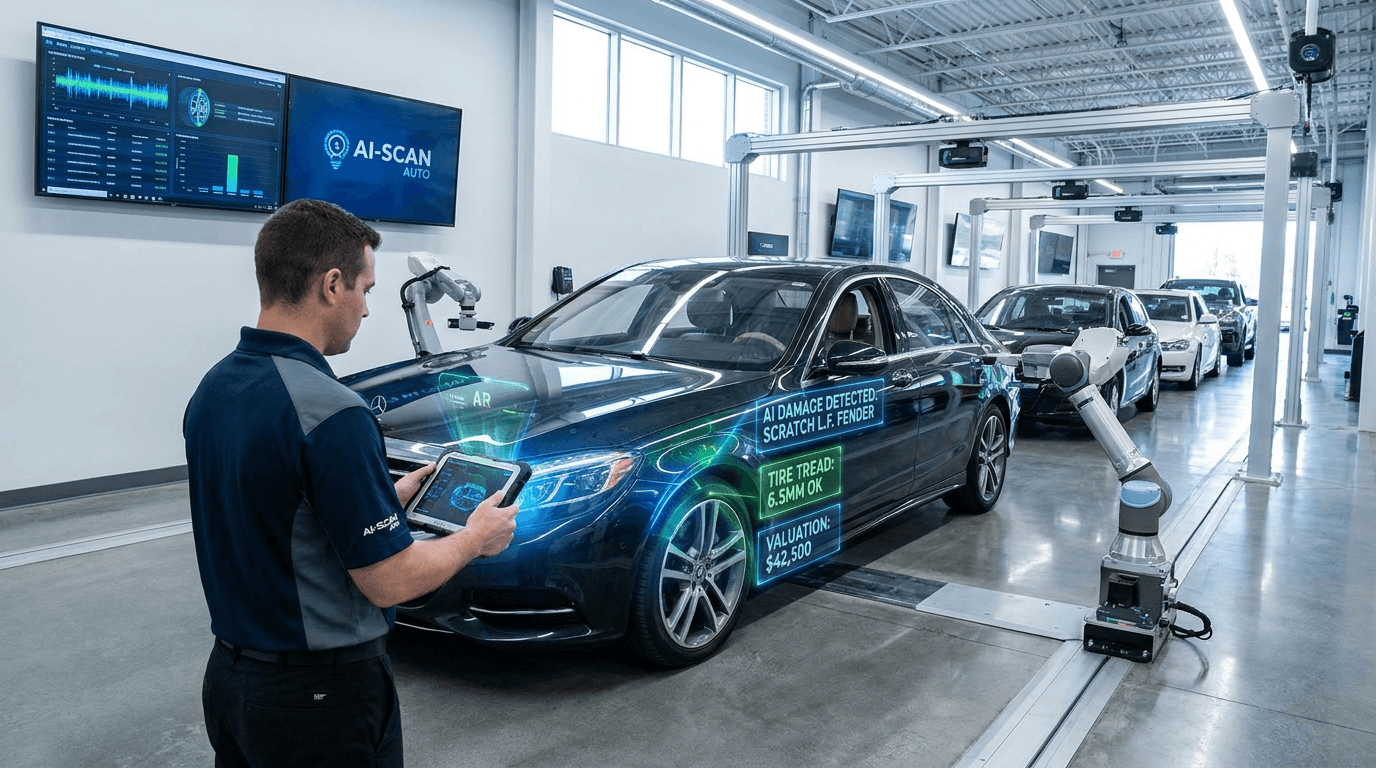
Modern computer vision AI streamlines appraisals by prompting mobile shoppers via text message to snap photos of their vehicle exterior, dashboard odometer, and tires. Computer vision algorithms instantly assess vehicle condition, identify body damage, verify tire tread depth, and check vehicle history databases.
The shopper receives a guaranteed, transparent trade equity valuation in under two minutes, increasing digital retailing completion rates by over 28%.
Use Case 3: Automated Service Lane Voice Dispatching (+22% Bookings)
In the service department, conversational voice AI answers incoming customer appointment calls on the very first ring, eliminating hold times and busy signals during busy morning check-in periods.
The AI integrates directly with the DMS service schedule, evaluating technician skill levels, shop bay capacity, and parts availability to book balanced repair schedules.
Service departments implementing voice AI capture an average of 22% more service bookings and eliminate the need to hire dedicated service BDC phone coordinators.
Use Case 4: Intelligent Warranty Claims Auditing (-85% Rejections)
Warranty claims processing is one of the most error-prone workflows in automotive retail. When service claims fail to match strict OEM factory guidelines, claims are rejected, delaying cash flow and costing dealerships thousands in manual claim appeals.
Machine learning audit engines review completed repair orders before submission to the manufacturer. The AI verifies technician story notes, labor operation punch times, and parts numbers against OEM warranty policy guidelines, flagging discrepancies for advisor review.
Dealerships utilizing automated warranty audits reduce factory rejection rates from 8.5% down to under 1.2%, shortening warranty reimbursement cycles from 21 days down to 4 days.
Use Case 5: Dynamic F&I Menu Personalization (+$240 PVR)
Traditional F&I menu presentations rely on static packages that present identical product offerings to every customer regardless of driving habits, credit profile, or vehicle usage.
Predictive AI analyzes customer demographic data, annual driving mileage, vehicle reliability history, and loan term duration to dynamically generate personalized F&I product recommendations.
Presenting tailored protection packages that directly address the customer specific lifestyle increases vehicle service contract (VSC) and GAP penetration, driving an average increase of $240 in back-end F&I profit per vehicle retailed.
Use Case 6: Parts Replenishment Min/Max Optimization (-31% Holding Cost)
Dealership parts departments routinely carry hundreds of thousands of dollars in obsolete, slow-moving inventory while simultaneously running out of high-demand fast-moving service parts.
Predictive replenishment algorithms analyze local service drive repair order trends, regional seasonal weather patterns, and upcoming vehicle recall campaigns to automatically adjust inventory stocking levels.
Parts departments reduce obsolete parts holding costs by 31% while lifting first-time service parts fill rates above 94%.
Use Case 7: Automated Accounts Payable Invoice Processing (-40% Cycle Time)
In the dealership business office, accounting clerks spend hundreds of hours manually keying paper and PDF vendor invoices for parts supplies, advertising services, and facility maintenance.
Computer vision pipelines ingest digital invoices, verify purchase order numbers, extract line-item costs, and automatically post balanced general ledger entries with zero manual keystrokes.
Accounting departments cut invoice processing cycle time by 40%, accelerating month-end closes and eliminating late payment penalties from suppliers.
Related Automotive Intelligence
CDK vs Reynolds vs DMSPilot: What Dealership Groups Should Know Before Switching in 2026
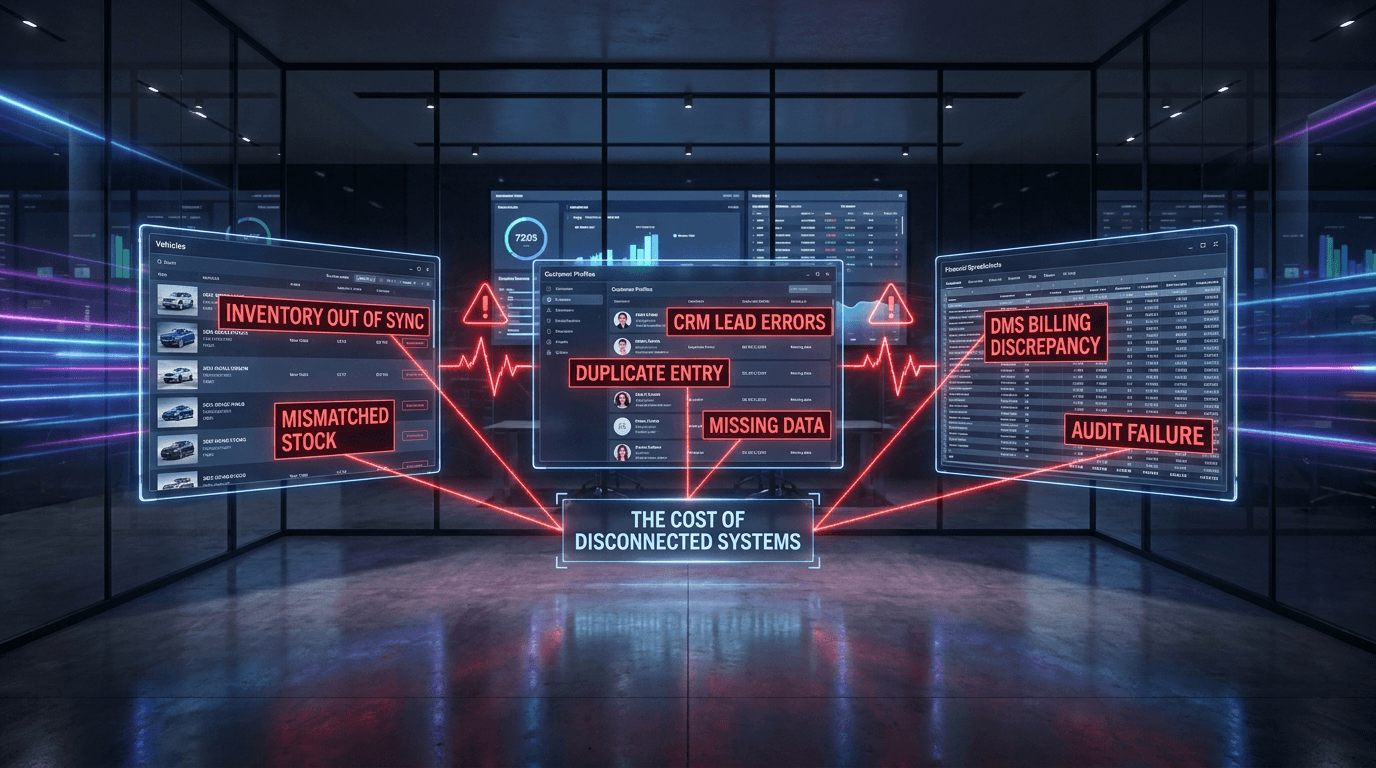
Why Dealerships Lose $200K+ a Year to Disconnected DMS, CRM, and Inventory Systems